
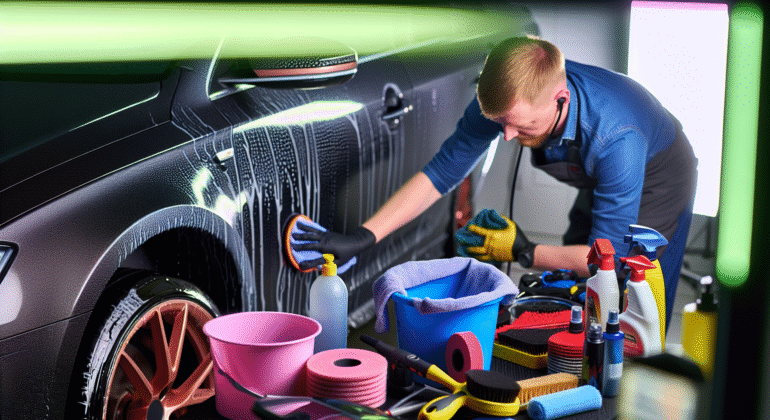
Now that you understand the principles of preparation, washing, and surface decontamination, it’s time to elevate your detailing game by incorporating professional techniques. These methods, often employed by seasoned detailers, focus on achieving a flawless finish and optimizing the longevity of your car’s appearance. This chapter will delve into advanced washing methods, paint correction concepts, and sealant/coating application.
Advanced Washing Techniques:
Beyond the two-bucket method, pro detailers utilize specific tools and strategies for targeted cleaning.
- The Grit Guard Advantage: While mentioned before, it’s worth emphasizing the importance of grit guards. Ensure they fit snugly in your buckets and regularly inspect/clean them. Consider using multiple grit guards per bucket for maximum sediment separation.
- Specialized Wash Mitts: Microfiber wash mitts are generally preferred, but consider using different mitts for different areas of the car. For example, use a dedicated mitt for the lower portions of the vehicle, which tend to accumulate more grime. A separate, softer mitt should be reserved for upper surfaces like the hood and roof.
- The “Touchless” Pre-Wash: Before physically touching the paint, use a pressure washer (with appropriate pressure settings – NEVER use a pressure washer at full blast on your paint) and a foam cannon to apply a thick layer of pre-wash soap. This pre-soak helps to loosen dirt and debris, minimizing the risk of scratching during the contact wash. Allow the foam to dwell for the recommended time (usually a few minutes) before rinsing thoroughly.
- Wheel Washing Strategies: Wheels are a notorious source of brake dust and road grime. Never use the same wash mitt or bucket for wheels and paint. Invest in dedicated wheel cleaning brushes of varying sizes and shapes to reach every nook and cranny. Consider using acid-free wheel cleaners specifically formulated to dissolve brake dust without damaging wheel finishes. Rinse thoroughly and dry with a dedicated microfiber towel.
- Drying Methods: Avoid air drying, as this leads to water spots. Professional detailers often use a combination of techniques:
- Forced Air Drying: Using a dedicated car dryer or a leaf blower (with a clean nozzle) to blow water off the surfaces. This is particularly effective for removing water from crevices and hard-to-reach areas.
- Microfiber Drying Towels: Use plush, dedicated microfiber drying towels. The “blotting” technique is preferred over dragging the towel across the paint. Fold the towel into quarters, using a fresh section for each panel of the car.
- Water Softener: Using a water deionizer or water softener is key when you have hard water with minerals in it. This results in a spotless drying process without water spots.
Introduction to Paint Correction:
Even with the most careful washing techniques, swirl marks, scratches, and other paint imperfections can develop over time. Paint correction involves using abrasives to level the clear coat, removing these imperfections and restoring the paint’s gloss and clarity. This is an advanced technique that requires practice and patience.
- Understanding Clear Coat: Modern cars have a clear coat layer atop the base color coat. This clear coat protects the color and provides the gloss. Paint correction involves carefully removing a very thin layer of this clear coat to eliminate imperfections.
- The Tools of the Trade: Paint correction is typically performed using a machine polisher (dual-action or rotary), polishing pads of varying aggressiveness, and polishing compounds containing different levels of abrasives.
- The Test Spot: Before tackling the entire car, always perform a test spot in an inconspicuous area to determine the optimal combination of pad, compound, and machine speed. This will prevent causing further damage to the paint.
- Stages of Correction: Paint correction often involves multiple stages:
- Compounding: The most aggressive step, used to remove deep scratches and severe swirl marks.
- Polishing: Removes the compounding marks and refines the paint, further enhancing gloss.
- Finishing: The final step, using a very fine polish to maximize gloss and clarity.
Applying Sealants and Coatings:
Once the paint has been properly washed, decontaminated, and corrected (if necessary), it’s essential to protect it with a sealant or coating. These products provide a barrier against environmental elements, UV rays, and contaminants, helping to maintain the paint’s appearance and make future washing easier.
- Sealants vs. Coatings:
- Sealants: Typically synthetic polymers that bond to the paint, providing protection for several months. They are relatively easy to apply and offer good gloss and water beading.
- Coatings (Ceramic Coatings): More durable and offer longer-lasting protection (often several years). They form a harder, more chemical-resistant layer on the paint. Coatings require meticulous preparation and application.
- Preparation is Key: Ensure the paint is perfectly clean and free of oils or residue before applying a sealant or coating. Use an IPA (isopropyl alcohol) wipe-down to remove any remaining polishing oils.
- Application Techniques: Follow the manufacturer’s instructions carefully. Typically, sealants and coatings are applied using a microfiber applicator pad, working in thin, even layers. Allow the product to cure for the recommended time before buffing off excess product with a clean microfiber towel.
- Layering: Some detailers choose to layer sealants or coatings for enhanced protection. If layering, allow each layer to fully cure before applying the next.
By mastering these professional techniques, you can achieve a truly showroom-quality finish on your car and protect your investment for years to come. Remember to always prioritize safety, practice patience, and consult product instructions for optimal results.
Conclusions
Mastering professional car washing and detailing techniques not only enhances your vehicle’s appearance but also protects its value and longevity. By choosing the right products, following careful steps, and maintaining your hard work, you’ll enjoy a spotless, gleaming car—inside and out—for years to come. Embrace these pro tips, and take pride in your meticulously detailed ride.